
Ansh Jain
Founder
Dubai’s F&B boom: 1,200 new licences, but declining average profitability
Dubai’s food & beverage sector is booming on the surface. According to the Dubai Department of Economy & Tourism (DET), the 2024 Gastronomy Industry Report shows that the emirate is now home to over 13,000 F&B outlets and dining concepts, while nearly 1,200 new restaurant licences were issued during 2024 alone. With this scale of expansion, competition is intense and operators now face heightened pressure on both revenue and margin.
Yet, more venues does not automatically translate to an industry with strong margins. Many restaurants in Dubai still report net profit margins in the 3-7% range, while only a small number of well-managed concepts reach 10-12%. There is a clear gap between occupancy/foot-traffic growth and healthy profitability.
The illusion of “Friday 8 PM success”
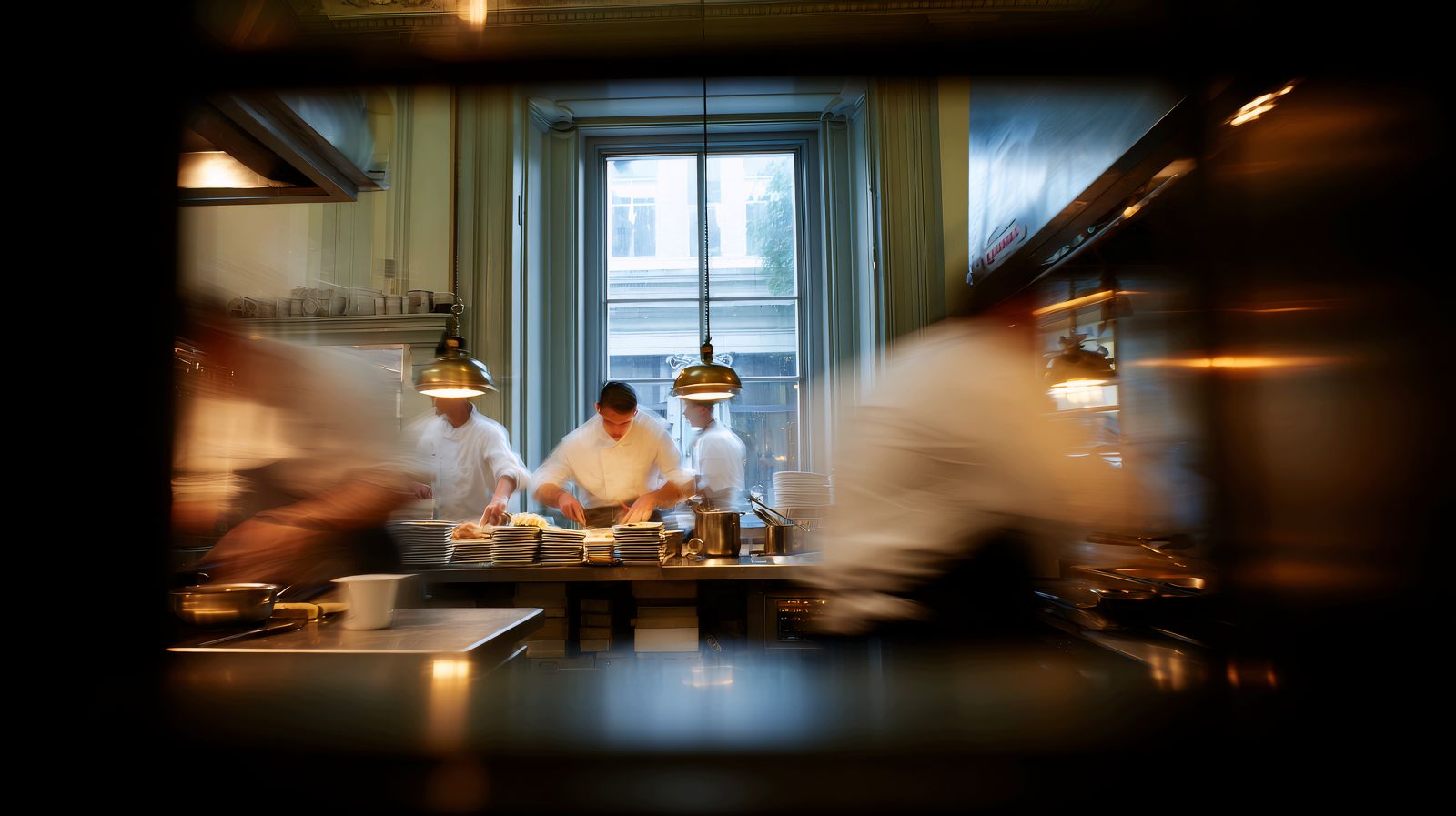
It is tempting to assume that a packed dining room at 8 PM on a Friday equates to success. Busy nights, social media images of full terraces, lively playlists, and high covers are all signals of perceived success. But occupancy alone is a weak proxy for profitability.
Here is why:
When you fill your prime hour (ex: 8-10 PM), you may already be operating at near-capacity. Adding covers here often requires extra labour, overtime, rush orders, kitchen stress, or even expanding seating at the expense of comfort, which raises costs or lowers average spend.
The average spend during a “busy” shift may drop if guests spend less time per cover or choose lower value items, thereby reducing margin per cover.
If you chase volume at prime hours through broad offers (rather than selectively during under-used hours), you risk cannibalising your full-price business. That means you replace a cover that would have paid full price with one paying a lower effective rate.
In short, full houses don’t guarantee healthy margins; they simply tell you that seats are filled. What matters is what you earn per seat per hour, not just how many covers you served.
Peak-hour offers and cannibalisation on the P&L
When restaurants introduce time-insensitive offers during peak hours (rather than during quieter periods), they often trigger margin leakage. Consider the following effects:
A guest who would have booked at 8 PM anyway now pays less, reducing the average spend and pulling down revenue per seat.
A guest who books early under an offer displaces a guest who might have booked at full price later. That’s not incremental traffic; it’s substitution.
Labour and kitchen costs remain largely fixed; adding volume in peak without increasing spend may reduce contribution margin.
In P&L terms this looks like: higher covers but lower average spend → variable cost (food, hourly labour) may increase modestly but fixed cost remains the same → net margin falls.
The cost of ignoring off-peak utilization
By focusing almost exclusively on filling peak slots, many operators leave large portions of their capacity under-used. For example, an outlet may run at 90% occupancy at 8-10 PM, yet only at 40% occupancy between 4-6 PM. During that off-peak window the kitchen is running, staff are scheduled, rent is accruing, but revenue is minimal.
Because fixed costs remain and revenue is low, the contribution margin in those hours is essentially zero or worse. The true cost of “idle” tables is not just lost revenue, it is lost opportunity to turn that idle capacity into incremental profit.
Rethinking “busy” with RevPASH as the true north metric
This is where the metric RevPASH (Revenue Per Available Seat Hour) becomes essential. Rather than focusing purely on occupancy or covers, RevPASH captures how much revenue each seat generates per hour of availability.
Formula:
RevPASH = Total revenue / (Available seats × Opening hours)
By analysing RevPASH across day-parts (ex: lunch, early dinner, late dinner, off-peak), operators can:
Identify where they are under-utilised (low RevPASH hours)
Compare not just seats filled but value generated per seat hour
Drive strategy to boost utilisation in low RevPASH segments, rather than just chasing occupancy in high-RevPASH slots
In practice, revisiting what “busy” means (not just full tables but high-value usage of each seat hour) is critical. A restaurant that runs at 70% occupancy for 4 hours at AED 250 average spend may generate lower RevPASH than one that runs at 50% occupancy for 6 hours at AED 180 spend, but with a more stable hourly revenue profile and less cost pressure.
By orienting strategy around RevPASH rather than occupancy, operators can focus on utilisation and value per seat hour. At Moqa, we help restaurants shift from the vanity metric of “covers” to the business metric of “value per seat hour”. Our platform enables you to identify under-performing time slots, introduce smart offers in those intervals, and track how each additional cover in the right hour contributes to profit.